

How do we do it
Intensive therapy
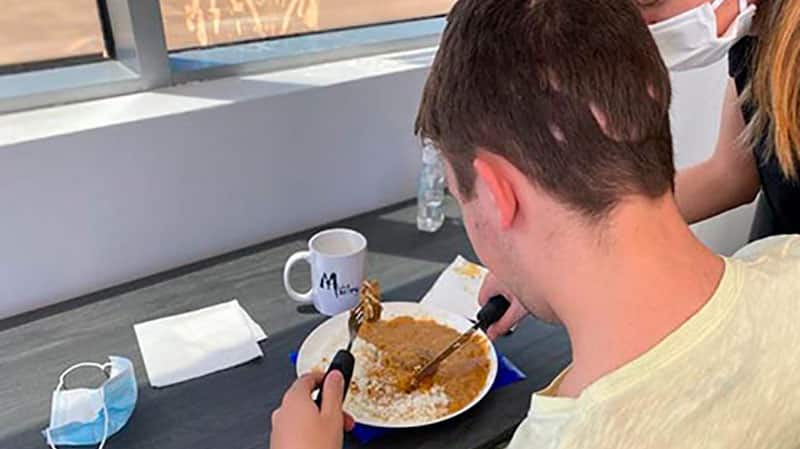
We have learned from experience that intensive training during the different stages of recovery obtains better and faster results than therapies that extend over several years and which lack the sufficient intensity and dosage.
Not only does intensive mean more, but also better
Our intensive training programmes are designed to achieve treatment improvements/objectives in the short term, representing a training and learning challenge to recover lost skills, or those that have been affected due to injury.
These short-term improvements can be maintained over time and may even increase with subsequent intensive therapy periods.
These therapies have proven the potential of producing neurophysiological and behavioural changes which other therapies have not demonstrated.
Not only does intensive mean more, but also better.
Latest technologies
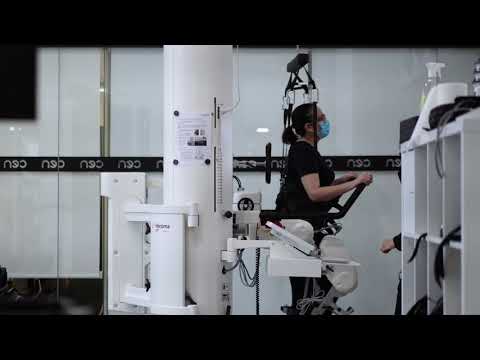
The development of the latest technologies in neurorehabilitation allows us to count on the latest advances in this field to implement our treatments, giving patients (especially those most affected) the possibility of benefiting from the advantages that these devices offer us:
The development of the latest technologies in neurorehabilitation has enabled us to provide patients with the very latest equipment available in the field, providing patients (especially those who are more affected) with the many benefits associated with the use of such devices, such as the recovery or improvement of gait functions, upper limb improvements, increased work times, increased number of repetitions and, therefore, the possibility of relearning and neuroplasticity.
CEN
The latest technologies and advanced robotics complement the intensive treatment protocols in neurorehabilitation and in cases of more severe deficits, allow treatments that would not otherwise be possible.

LOKOMAT
Robotic exoskeleton for gait training.

Rysen
The only system in the world of 3D weight support for gait and balance training.

C-Mill VR
Treadmill instrumented with virtual reality for the evaluation and training of gait and balance.

Armeo Spring
Exoskeleton for retraining the movements and functionality of the arm.

Motion sensors
Armeo Senso, GaitUp, and Nushu: for the assessment and training of the upper limb and gait.

Electrostimulation treatments
The latest generation of devices based on functional electrical stimulation, sensory stimulation, transcutaneous spinal cord stimulation, and denervated muscle stimulation.

Virtual reality systems in rehabilitation
Virtual reality systems in rehabilitation, such as MindMotion Go, MindPod, or Oculus Quest 3 headsets, which help enhance and complement traditional therapy.

Electroencephalography and brain functional connectivity
Detailed analysis of the functional network derived from the EEG signal. Both the clinician and the patient and their families can see the difference in the pattern of functioning of their neural networks

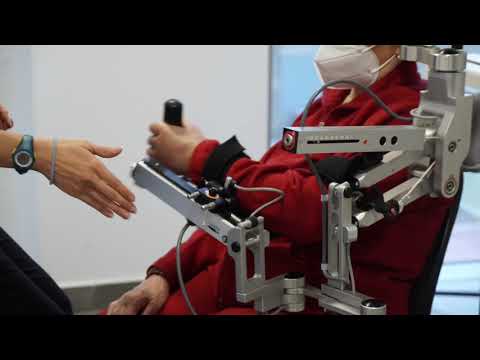
ArmMotus M2Pro
Advanced upper-limb rehabilitation robot, designed for patients with neurological and musculoskeletal conditions.

MDurance surface electromyography
They allow us to determine the real patterns of muscle activation by measuring the electrical signal generated by the muscle groups before this activation process

Andago
It combines dynamic support and active mobility to train gait in safe, real-world environments.

Able Exoskeleton
Lightweight and accessible exoskeleton that enhances active gait in patients with neurological injuries.

Multiball
Interactive training that combines movement, play, and technology to enhance rehabilitation and motivation.

MyoQuality
Advanced technology to assess and optimize muscle quality in real time.

Invasive Physio
Device for invasive physiotherapy treatments to optimize pain management and neuromuscular function.

Neurofeedback
Brain training based on real-time feedback to enhance cognitive and emotional functions.

Transcranial Magnetic Stimulation
Non-invasive therapy that modulates brain activity using magnetic pulses to improve neurological function.
CEN is a member of the International Society for Advanced Technology in Rehabilitation and one of the organizers of the world’s most important event on rehabilitation and advanced technologies.
Specialized Evaluations and Treatment Units
The specialized units allow us to do a assessments and treatments that include evaluation protocols focused on specific problems. The different units are integrated and coordinated with each other.
NONINVASIVE BRAIN STIMULATION PROGRAM
TRANSCRANIAL MAGNETIC STIMULATION
Transcranial magnetic stimulation (TMS), also known as repetitive transcranial magnetic stimulation (rTMS), is a noninvasive form of brain stimulation in which a changing magnetic field is used to cause electric current at a specific area of the brain through electromagnetic induction. This has demonstrated to activate brain cells and improve different neurological disorders. This technique is frequently used when other treatments have not been effective.
What conditions can FES be effective for?
Today, TMS is recognized as an effective treatment for a broad spectrum of neurological and psychiatric disorders.
This technique is used in our program to treat patients with:
- Stroke (cerebral infarction)
- Depression
- Chronic neuropathic pain
- Aphasia (language and communication disorders)
Other conditions that may benefit include:
- Traumatic brain injury
- Parkinson’s disease
- Dysphagia (swallowing difficulties)
- Spasticity (altered muscle tone)
- Motor injuries or impairments
- Migraines
- Hand and forearm dystonia (writer’s cramp)
- Tinnitus”
Assessment and follow-up
We believe that an appropriate assessment is essential throughout the treatment process (baseline/final/ intermediate assessments) in order to guarantee the very best professional service and offer reliable and objective data of our intervention and the patient’s progress.
This also facilitates the follow-up of our treatment, the motivation of our patients and helps to optimise our intervention. Our patients and family members will be able to monitor their progress at all times in an objective and reliable manner.
This aspect is very important to justify the need for treatment or the extension of the same, on behalf of insurance companies, embassies or any other entity which finances the rehabilitation treatment.
Treatment design and monitoring of progress
Our multidisciplinary team is in charge of evaluating or designing the treatment that best suits the needs of each patient and will perform a thorough follow-up to adapt the treatment to each patient and their family.
The treatment provided to each of our patients is individual, intensive and specialised.
Neuroplasticity and enriched environments
“Neuroplasticity is the skill of the nervous system to be able to respond to intrinsic or extrinsic stimuli, reorganising its structure, function and connections.”
The brain is a system which self-organises and adapts to the specific surrounding environment.
Understanding the adaptational behaviour of the nervous system in response to an injury means understanding the interaction among the different subsystems of the body and the environment as well as the continuous exchange of information between the nervous system, the body and the environment.
For this reason, in our therapies we design “enriched environments” which enhance the neuroplastic of the nervous system of each of our patients.
